
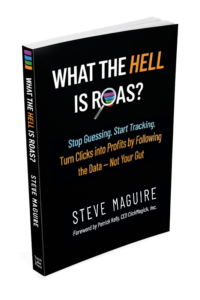
The Book
When I started my career, I was a programmer who worked my way up to Senior Developer at Microsoft. This was the mid-80s, back before Windows, when Microsoft built apps only for MS-DOS and the Macintosh. I was on the Excel 1.x development team, codenamed Odyssey. Hard to believe that was over 40 years ago.
As Microsoft grew and became more corporate, I decided to start my own software company. I had it planned out and had already given notice. My exit interview was with Steve Ballmer. He urged me to stay, but when it became clear I was committed to leaving, he slid my employee contract across the table and pointed to a paragraph. “Read this,” he said.
The paragraph said that upon leaving Microsoft’s employ, I couldn’t work in the software field in any capacity for two years. My signature was right there. To say I was floored would be an understatement. With false bravado, I said it would probably take two years to write the code I was planning anyway, so I’d release it after the waiting period.
Ballmer told me to think again and flatly explained that any code I wrote during those two years would belong to Microsoft.
Years later, I learned this was completely unenforceable. At most, Microsoft could have prevented me from working on a competing spreadsheet program. But I was young and naïve, and I took what I was told as fact. I’d signed the contract, after all.
So I pivoted.
For the next two years, I wrote two advanced-level software development books I’d wanted to write anyway and I published them through Microsoft Press to make sure I wasn’t violating my contract. Both became best-sellers and were used in college courses for years until they began to feel dated. That detour was worthwhile in many ways, and I can say that the book in your hands wouldn’t exist if I hadn’t done that.
I planned to launch my software company after the two-year wait, but through a series of bizarre, winding circumstances, I found myself doing outside sales instead. And, to my surprise, I was good at it.
I discovered I genuinely enjoyed sitting down with individuals and small business owners, making presentations, and showing how I could solve their problems. I did that for 15 years, while simultaneously working on software projects in the sales industry. I’d set my appointments for the week, and code the rest of the time.
Eventually, I moved into online sales and was introduced to web-based tracking systems. After trying several popular platforms, a marketer I respected suggested ClickMagick.
I noticed the difference immediately. Instead of stagnating, ClickMagick released new features regularly—and still does. Support was just as strong: fast responses from people who knew the tool inside and out.
I settled into using ClickMagick and didn’t think much about it until one day I received an email from its founder, Patrick Kelly. He sent it to the entire user base—the only time he’s ever done that. In the message, he explained that he was looking for someone with a technical writing background who already knew how to use ClickMagick. Features were being added so quickly that the knowledge base was falling behind.
I wasn’t looking for more work, but I enjoy technical writing, so I contacted Patrick to learn more. We talked for two hours, and he reminded me three times during the call that this was a writing task, not a programming gig. I assured him that I understood that, and I agreed to join the team.
And, as these things go, what was supposed to be a short project turned into eight years.
Once the knowledge base was fully in sync with the app, Patrick asked if I’d be interested in joining the development team. Since I was already expert in the programming language and development tools ClickMagick used, I accepted. I joined a talented group of programmers, all committed to making ClickMagick the most accurate and easiest-to-use real-time tracker available.
So why this book?
After decades in both software development and sales, I’m now retired and working on personal projects. But during my time at ClickMagick, one issue kept coming up—one I felt we weren’t really addressing.
People would sign up for ClickMagick because a friend or mentor had told them tracking was something they needed to do, but they struggled to understand why it mattered and how to put it into practice.
ClickMagick’s documentation didn’t teach people how to track; it taught them how to use ClickMagick. The assumption was that users already understood the fundamentals.
That’s not unusual for software. Photoshop doesn’t teach graphic design. Excel doesn’t teach accounting. Video editors like DaVinci Resolve don’t teach filmmaking. Users are expected to arrive with the necessary background.
But unlike those tools, we had nothing to point people to—no book or course that explained why tracking matters or the philosophy behind doing it well.
Yes, there were plenty of websites that repeated what Google documented, but they didn’t teach tracking. They taught how to use Google Analytics or what to do after tracking pointed out a problem.
I wanted a book in everyday language for people unfamiliar with tracking—one that explained the foundations and how to set it up.
That’s why I wrote What the Hell is ROAS?.
If you’re new to tracking, this book should remove any surprises and confusion, and make it clear why you should track.
Yes, some concepts get a little technical at times. Overall, though, tracking is far simpler and more straightforward than most people expect.
You may even finish this book and think, “That’s it?!”
To which I’d say, “Yup—that’s it.”
Open the book. Let’s get started.